Historic Interiors • Austrian Alps • Neuberg Abbey

Templar’s Hide

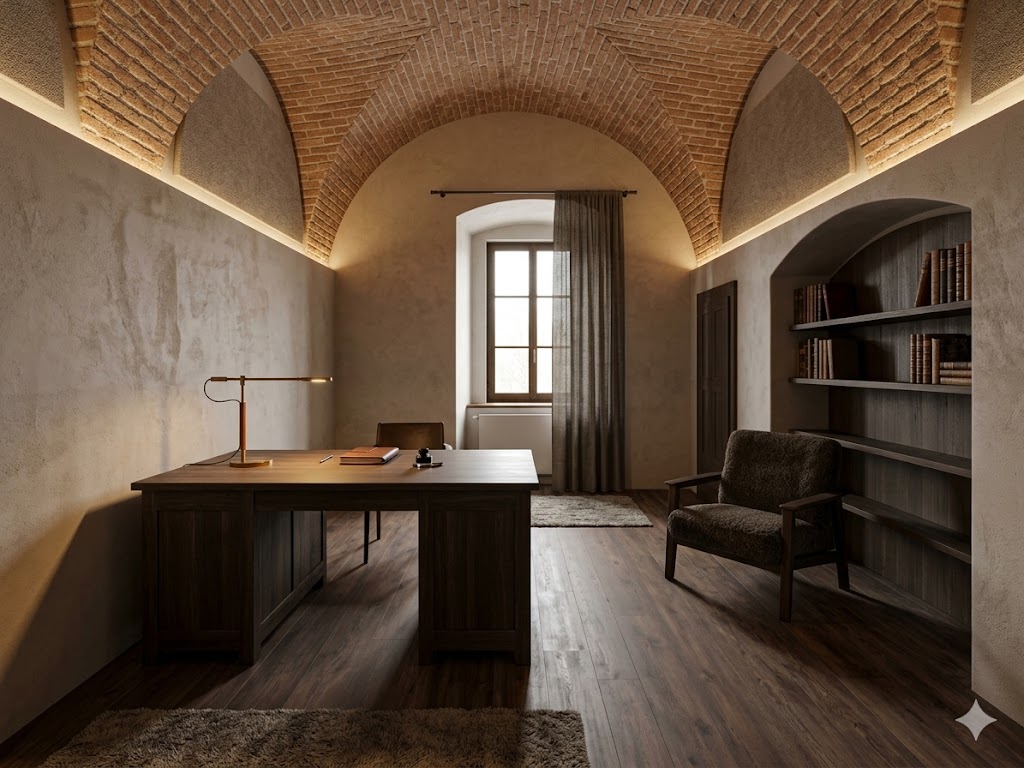
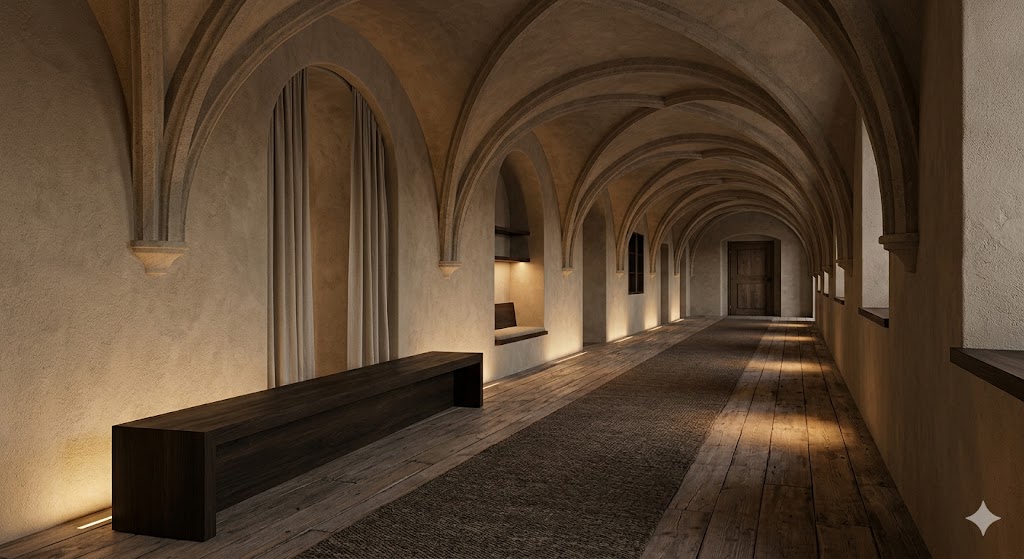
Deep inside the former Cistercian abbey of Neuberg an der Mürz, a forgotten apartment with soaring Gothic vaults has quietly evolved into something between an intellectual refuge, a monastic retreat and an atmospheric winter residence. Local legends surrounding King Ottokar II, the Knights Templar and a disastrous alchemist abbot still linger through the corridors — perhaps explaining why the abbey’s medieval interiors were never fully modernised, and why the ancient architecture survives today with such unusual integrity.

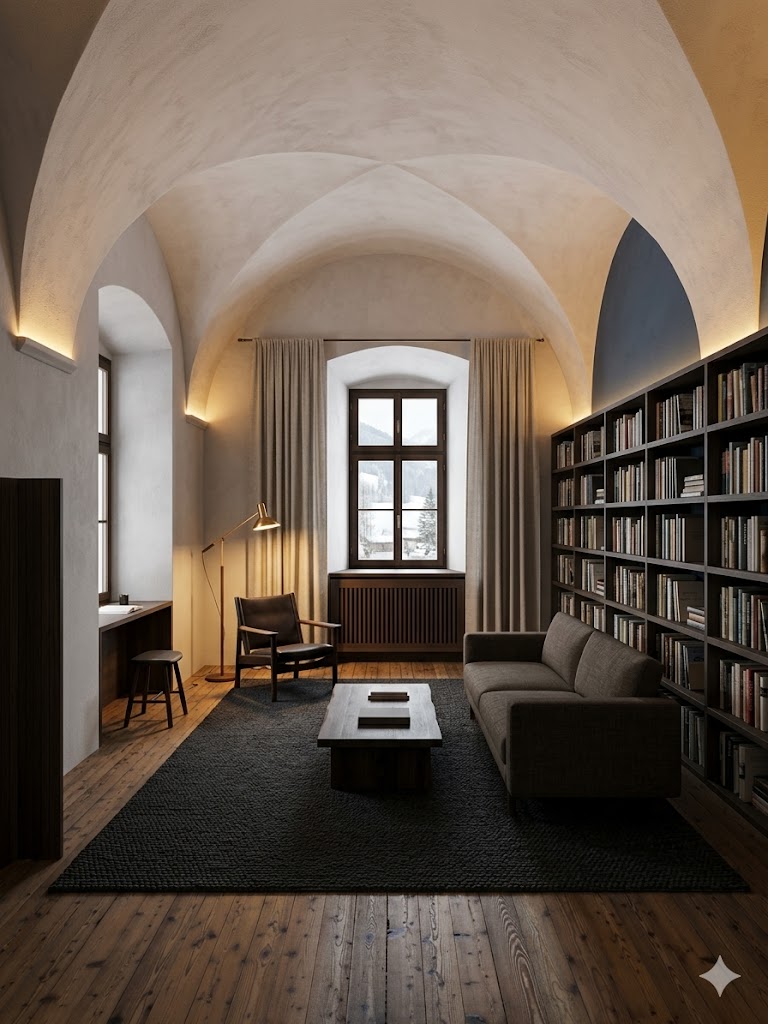
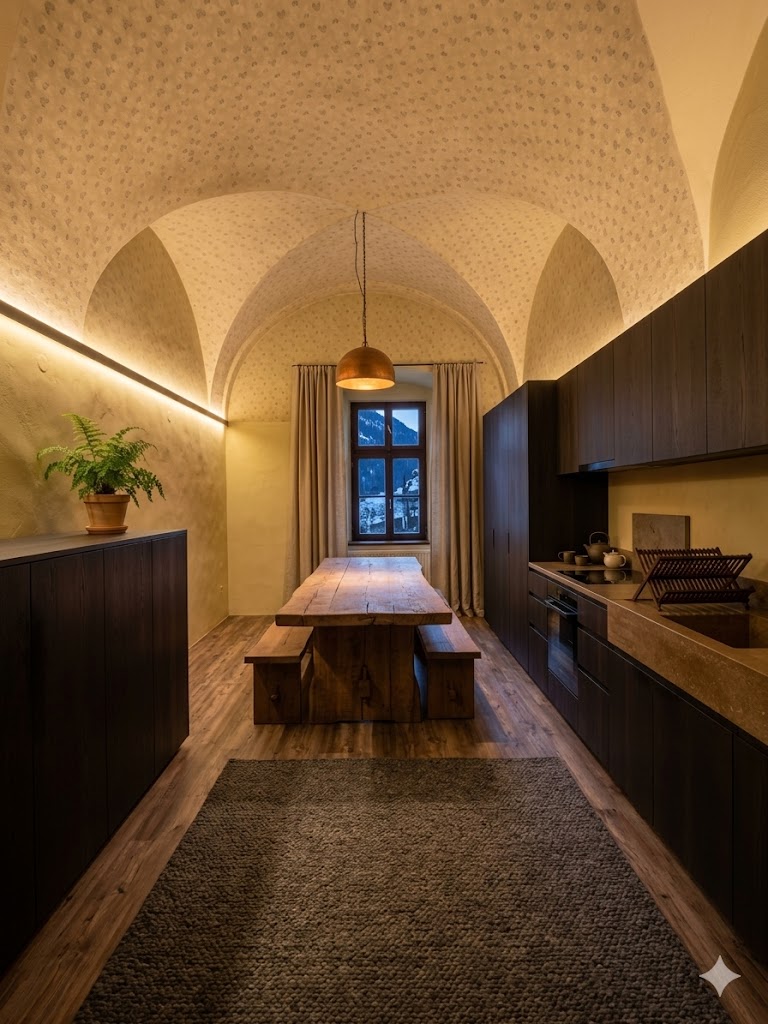
The kitchen embraces restraint rather than renovation. Existing proportions remain untouched while pale plaster, warm oak and soft concealed lighting create an atmosphere closer to a monastic winter residence than a contemporary apartment.

A Gothic shell preserved by absence

Unlike many European abbey conversions, the rooms here were never aggressively renovated during the nineteenth or twentieth centuries. According to local stories, the abbey’s financial decline began under an eccentric alchemist abbot whose speculative experiments allegedly consumed enormous resources intended for expansion and modernisation.

Whether entirely true or not, the consequence is visible today: remarkably intact vaulted interiors whose proportions remain closer to the medieval monastery than to later bourgeois adaptations. The apartment’s contemporary interpretation therefore relies less on reconstruction than on atmosphere — allowing silence, scale and material tactility to dominate the experience.

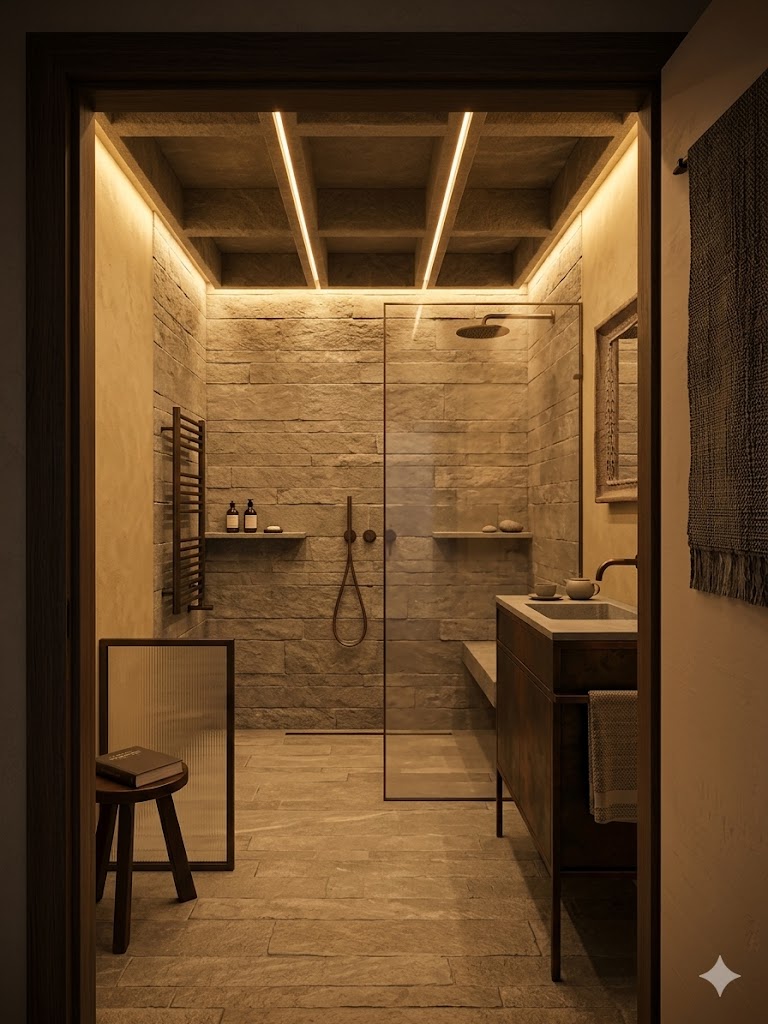
Inspired loosely by the architectural philosophy of Peter Zumthor, the interiors focus on warmth through light rather than decoration. Existing white plaster walls are preserved, timber remains natural and understated, and every intervention appears intentionally quiet.
“Rather than restoring the abbey into polished historicism, the apartment accepts the beauty of incompletion — a place where centuries of silence remain physically present.” Architectural Digest Style Notes

An atmosphere of winter protection

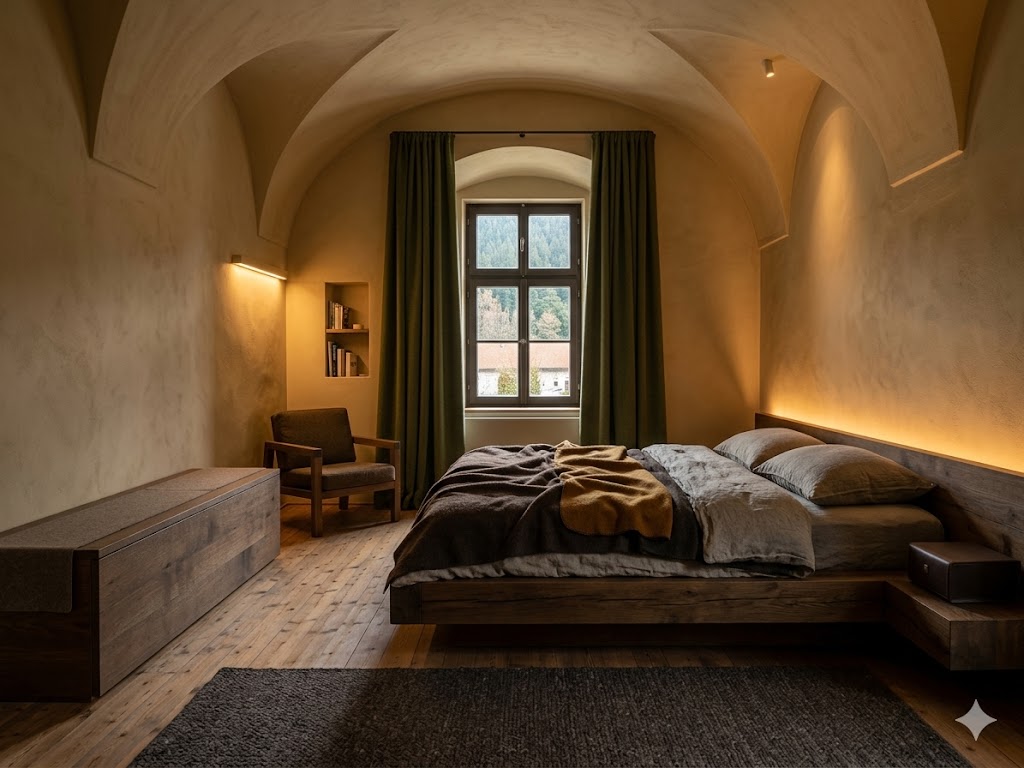
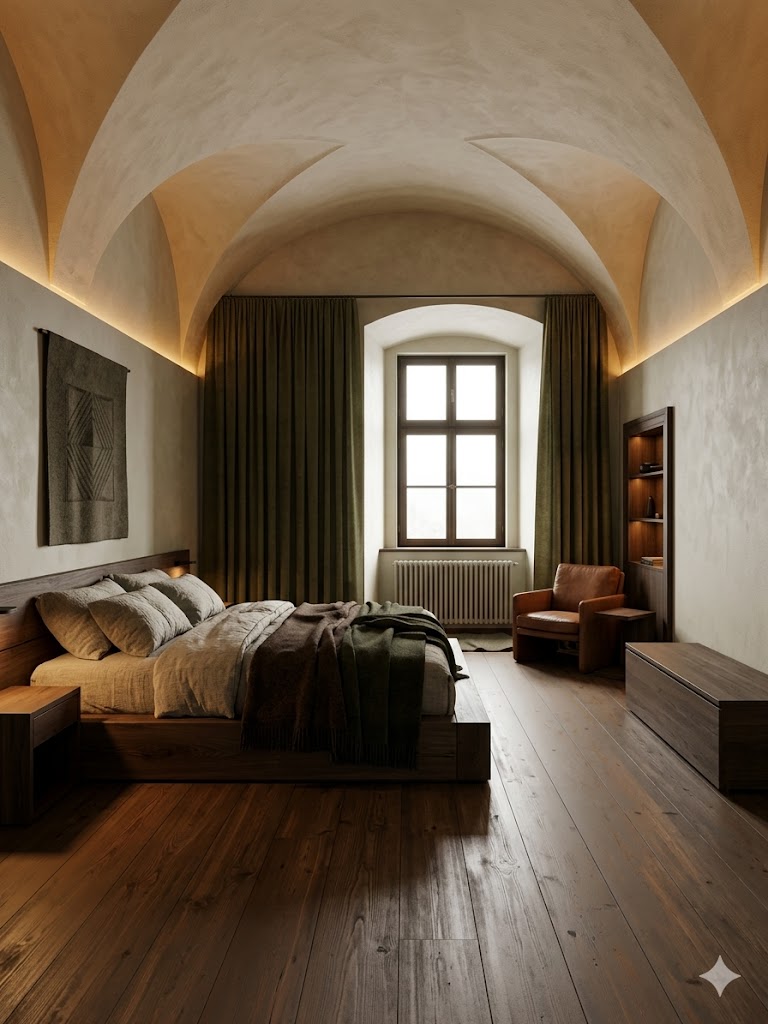
The bedroom demonstrates the project’s central idea most clearly: psychological warmth instead of visual spectacle. Linen curtains soften the deep-set windows, low timber furniture grounds the scale of the room and concealed perimeter lighting allows the Gothic ceiling to remain luminous rather than dramatic.

There is nothing overtly luxurious here. The atmosphere feels instead like an alpine intellectual retreat — a place designed for reading, contemplation and retreat during long winters in the Mürz valley.

Importantly, the apartment avoids the common temptation to turn medieval architecture into theatrical “castle aesthetics.” The restraint is what allows the historic vaults to retain emotional credibility.

Soft indirect lighting and pale plaster surfaces preserve the sense of spatial calm throughout the private rooms, where the architecture remains dominant over furniture and decoration.
“Legends speak of hidden Templar connections, vanished abbey wealth and alchemical obsessions — but what survives most powerfully is the architecture itself.” Neuberg Abbey, Austria